
Cookware
Cast Iron vs Stainless Steel for Everyday Cooking
Two durable cookware families, two very different working styles. Choose by heat behavior, maintenance and the meals you cook most.
Quick read
Key takeaways
- Cast iron rewards heat stability and patience; clad stainless rewards control and versatility.
- Pan construction matters more than the word stainless by itself.
- Weight, handle design and cleanup should influence the decision as much as searing performance.
- Many kitchens benefit from owning one of each rather than forcing one pan to do everything.
Start with the food, not the cookware tribe
Cast iron and stainless steel are often treated like competing teams. That framing is not very useful. The better question is what you cook, how quickly you need the pan to respond and how much maintenance you will actually perform.
Both materials can last for years. Both can also be frustrating when used for the wrong job. A heavy skillet that holds heat beautifully may feel excessive for a fast pan sauce. A responsive stainless pan may require more burner management when you want a long, steady sear.
How cast iron behaves
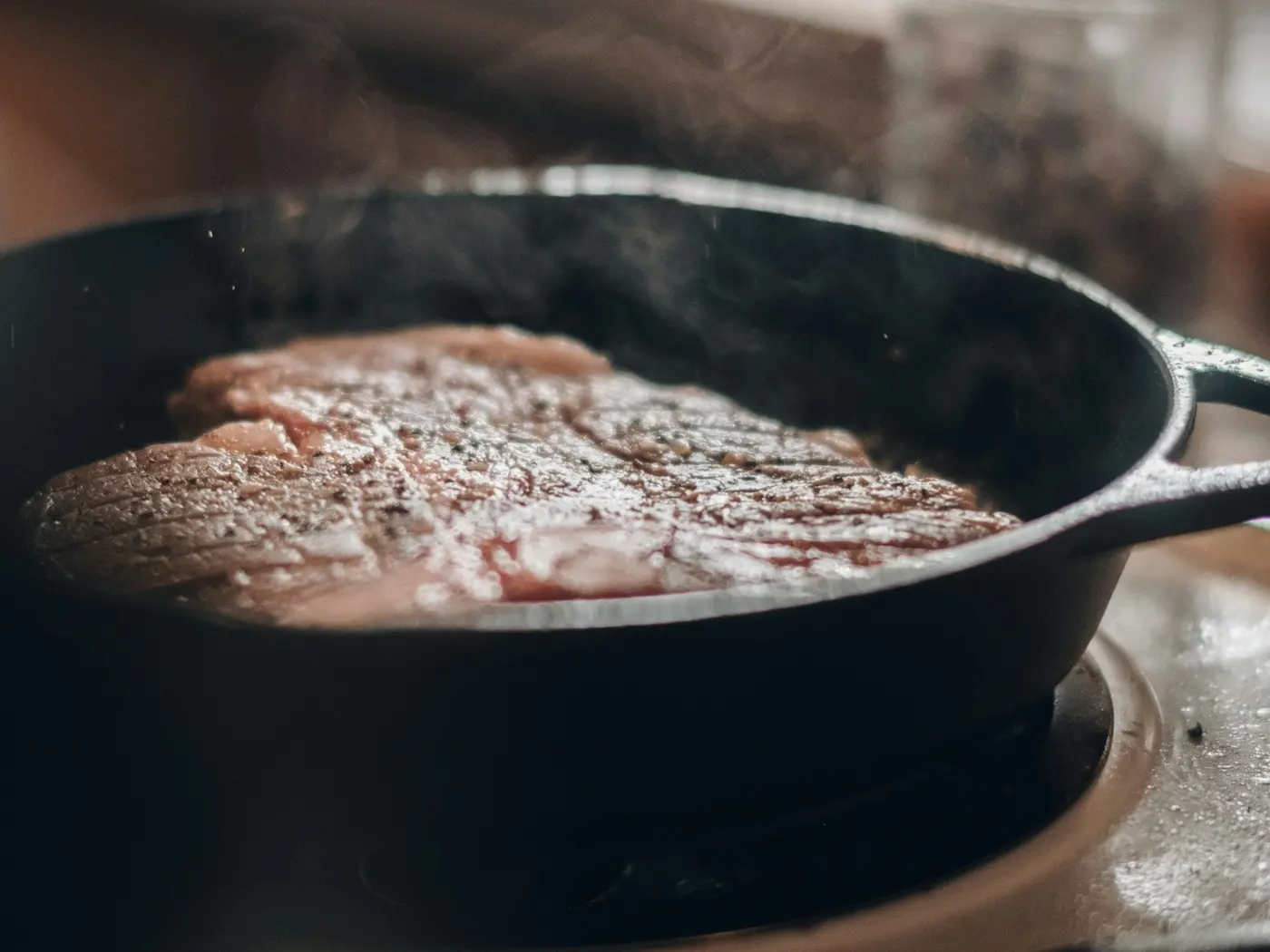
Cast iron typically has substantial mass. It takes time to heat, but once hot it resists rapid temperature changes. That makes it useful for searing, shallow frying, oven finishing and dishes where steady heat is more valuable than fast adjustment.
The same mass creates trade-offs. Large pans are heavy, handles can become hot and rapid temperature corrections are difficult. Bare cast iron also needs thorough drying and a maintained seasoning layer. None of this is complicated, but it does require a routine.
A single cast-iron workhorse
If you want to learn cast iron without storing a full set, one roomy skillet is usually the cleaner starting point. A 12-inch pan gives useful searing area and enough capacity for larger batches, but the loaded weight and storage footprint deserve serious consideration.
When a low-sided griddle makes more sense
A low-sided cast-iron griddle is easier to approach with a spatula than a deep skillet. That geometry suits flatbreads, pancakes, eggs and foods that need frequent turning, though it provides less protection from splatter and is not intended for saucy cooking.
How stainless cookware behaves
Stainless steel is valued for corrosion resistance, a nonreactive cooking surface and straightforward cleaning. However, stainless steel alone does not spread heat especially well. Good cookware usually bonds it to a more conductive core, often aluminum, across the base or throughout the body.
That construction can make a clad stainless pan more responsive than cast iron. It is well suited to browning, sautéing, acidic ingredients, pan sauces and jobs where you want to see fond develop on the surface. Food may stick if the pan, oil and timing are poorly managed, but sticking is not automatically a defect.
A focused 10-inch tri-ply alternative
A 10-inch stainless skillet can be a practical middle size for eggs, vegetables, pan sauces and smaller portions. Tri-ply construction is worth checking because the conductive layer should extend across the working surface rather than relying on stainless steel alone to distribute heat.
When a stainless set earns its storage
A multi-size set makes sense only when each pan has a repeated job. Smaller pans suit single portions and garnishes; larger pans provide more browning area. Lids add flexibility, but they also add storage and washing, so count the pieces you will actually use rather than the pieces included.
The cleanup difference
Stainless steel tolerates soaking and a wider range of cleaning methods. Burned-on residue may still take effort, but the surface does not depend on seasoning. Bare cast iron should not be left wet and should be dried promptly; a light protective layer of oil may be useful depending on the pan's condition and manufacturer instructions.
Choose the routine you will repeat, not the ritual that sounds impressive online. A pan that causes you to avoid cooking is not the durable choice for your kitchen, even if the material could theoretically last for generations.
Comfort and control
Lift the pan before buying if possible. Consider it with food inside, not empty. A helper handle can make a large skillet safer to move. Handle angle, length and heat transfer affect control more than many specification sheets suggest.
Also match the base to your cooking surface. Flatness matters on glass and induction tops. For induction, confirm compatibility instead of assuming every stainless product will work; the magnetic properties depend on the construction.
Which should you buy first?
Choose cast iron first if you regularly sear, fry, bake in the pan and do not mind weight or a drying routine. Choose clad stainless first if you want one flexible pan for browning, acidic sauces, vegetables and everyday stovetop control.
If budget and storage allow, the practical answer is often a modest cast-iron skillet plus a well-constructed stainless sauté pan or skillet. Each covers the other's weaker situations without requiring a large cookware set.
- Cast iron: stable heat, high mass, simple construction, more care.
- Clad stainless: responsive control, broad ingredient compatibility, easier washing.
- For either: inspect base flatness, handle security, usable cooking area and total loaded weight.
Bottom line
Cast iron is not automatically more professional, and stainless is not automatically more convenient. Buy the heat behavior and maintenance routine that match the meals you actually cook.